top of page

Texas Field Sobriety Tests: What the Law Actually Requires

Writer: Christopher Demerson
Christopher Demerson
Apr 10
9 min read

Updated: Sep 3


You are driving home along I-10 or navigating the interchanges of I-45 in Houston when the flashing lights appear in your rearview mirror. After a brief conversation, the officer asks you to step out of the vehicle to perform a few "simple" tests. What follows is not just a test of your balance; it is a structured sequence designed to build a case. Most drivers believe these tests are objective measures of sobriety, and believe they have no choice but to take them. Both assumptions are wrong, and at The Demerson Firm, PLLC, we think knowing the difference is the most useful thing you can carry into that moment.

This article explains what Texas law actually requires of you during a DWI stop, what it does not, and where the roadside tests break down. We keep our caseload small on purpose, which means there is time to watch the video frame by frame, read the report line by line, and find the parts that do not hold up.

Key Takeaways

  • Field Sobriety Tests Are Voluntary: In Texas you are not legally required to perform roadside agility tests, and declining them carries no automatic license penalty and no criminal charge.

  • You Can Also Refuse a Breath or Blood Test: Refusing is not a crime. Tex. Transp. Code § 724.013 provides that a specimen may not be taken over your refusal, outside specific mandatory-draw situations. Refusal does carry a license suspension and can be used against you at trial — those consequences are explained below.

  • The "Science" Is Subjective: Scoring happens in the judgment of the arresting officer, which makes these tests susceptible to human error and confirmation bias.

  • External Factors Matter: Conditions on Houston roads — uneven pavement, passing traffic on the 610 Loop, poor lighting, the patrol car's own strobes — can cause a sober person to "fail."

  • Medical Conditions Mimic Impairment: Pre-existing injuries, neurological issues, and inner-ear problems can produce results an officer will read as intoxication.

  • The ALR Deadline Is 15 Days: Your driver's license case runs on a separate and much faster clock than your criminal case. Miss it and the suspension takes effect automatically.

The Problem with Standardized Field Sobriety Tests (SFSTs)

Field sobriety tests in Texas are roadside performance evaluations used to establish probable cause for an arrest. They are subjective by design, and a number of physiological and environmental factors can produce a false positive. While the National Highway Traffic Safety Administration (NHTSA) publishes standardized procedures, the grading happens in the mind of an officer who has usually already formed a suspicion.

There are three standardized tests: the Horizontal Gaze Nystagmus (HGN), the Walk-and-Turn, and the One-Leg Stand. The HGN test, where an officer tracks your eye movement with a pen or flashlight, is the most easily misread. It looks for involuntary jerking of the eye — but nystagmus has many causes unrelated to alcohol, including fatigue, certain prescription medications, inner-ear and neurological conditions, and even the strobe of the patrol car's own lights in your peripheral vision.

The "divided attention" tests — the Walk-and-Turn and One-Leg Stand — are harder than they sound. In the Walk-and-Turn you can be marked down for starting a second too early or raising your arms for balance, while standing on a painted line a few feet from traffic moving at seventy miles an hour. This is where The Demerson Firm, PLLC goes to work on the officer's testimony, showing how the recorded "clues" are often signs of nervousness, footwear, or physical limitation rather than intoxication.

Police cruiser lights illuminating a white line on I-10 during a Houston field sobriety test at night.

The Texas Legal Framework: What You Must Do, and What You Don't

Start here, because this is the single most misunderstood point in Texas DWI law. Implied consent lives in Chapter 724 of the Texas Transportation Code — not the Penal Code — and it does not mean you are legally required to blow. Under § 724.011, a driver arrested for DWI is deemed to have consented to a breath or blood specimen, but that consent is expressly made "subject to this chapter." Section 724.013 then provides that a specimen may not be taken if the person refuses, outside the specific mandatory-draw circumstances listed in § 724.012(a-1) and (b). Refusing is not a crime.

Refusing does carry consequences, and you should understand them rather than be surprised by them:

  • License suspension. Under § 724.035, refusal results in a 180-day suspension — or two years if your driving record shows one or more alcohol-related or drug-related enforcement contacts in the preceding 10 years.

  • Your refusal can be used against you. Section 724.061 makes the refusal admissible at trial, and prosecutors do argue it to juries.

  • The officer can seek a warrant. Section 724.015(a)(3) requires the officer to warn you of this before asking, and in Harris County a blood warrant can be obtained quickly.

There is a protection on the other side of the ledger that most drivers never hear about. Under § 724.012(e), an officer may not require a specimen unless the officer obtains a warrant or has probable cause to believe exigent circumstances exist — and that limit applies even in the mandatory-draw situations. A blood draw taken with neither a warrant nor genuine exigency is a suppression issue, and it is one of the first things we look for.

Field sobriety tests are a separate matter entirely. Nothing in Chapter 724 covers them. They are voluntary, there is no license penalty for declining, and declining is not a crime. Many drivers in Harris County do not know the distinction and feel pressured into performing physical exercises whose main function is to create video evidence.

The framework is strict, but it cuts both ways. When The Demerson Firm, PLLC takes a case, we examine whether the officer had reasonable suspicion to stop you and probable cause to arrest you. If the field sobriety tests were the sole basis for probable cause and were administered incorrectly, that is a real problem for the prosecution.

It is also worth noting where criminal defense and Texas Personal Injury intersect. A DWI arrest often follows a collision, and if someone was hurt the stakes rise sharply. Whether you need a Houston car accident lawyer or a defense to a felony charge, the evidence gathered at the scene should be tested rather than accepted at face value.

The Strategic Advantage of Challenging FST Evidence

Challenging field sobriety evidence means measuring the officer's actual administration against the NHTSA standards and identifying the deviations. An officer who holds the stimulus at the wrong distance or moves it too quickly during an HGN test, or who gives incomplete instructions before the Walk-and-Turn, has compromised the result — and when the State's primary proof of intoxication is shown to be unreliable, suppression or dismissal becomes a live possibility.

At The Demerson Firm, PLLC, we use video analysis and, where warranted, forensic experts to surface these discrepancies. We look for the environmental factors the report leaves out. Was the ground level? Was it raining? Were the patrol car's strobes flashing in your eyes during the eye test? Those details are often what shows a judge or jury that the "failure" belonged to the conditions rather than the driver.

We treat each client as a person with a life and a career worth protecting rather than a file to move along. Careful work on the field sobriety evidence frequently weakens the State's case in ways that open the door to a dismissal, a reduction, or an acquittal — though what any particular case can achieve depends entirely on its own facts.
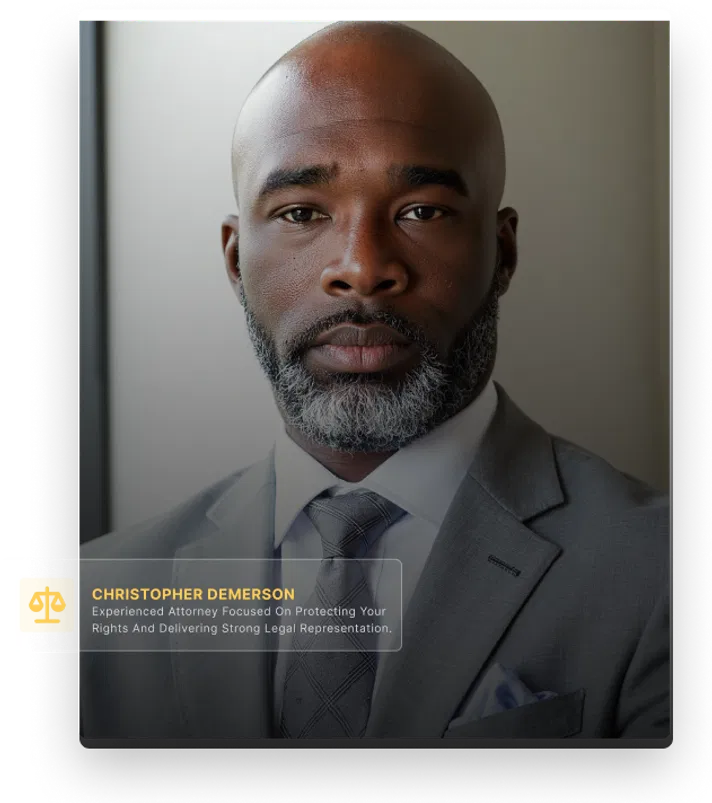
Christopher Demerson, Experienced Attorney Focused On Protecting Your Rights And Delivering Strong Legal Representation.

What a Strong DWI Defense Is Worth

A well-built DWI defense protects your professional license, your insurance rates, and your record. In Harris County the consequences of a conviction are permanent and reach further than most people expect — from renting an apartment to holding certain jobs to keeping a commercial license.

When you weigh the cost of a defense, look past the legal fee to the cost of a suspended license, the increase in insurance premiums, and the potential loss of income. The Demerson Firm, PLLC offers a criminal defense consult that looks at the whole situation, not just the charge on paper.

Quick Facts: The Deadlines and Numbers That Matter

  • 15 days: The deadline to request an ALR hearing under Tex. Transp. Code § 724.041. Requesting one on time stays the suspension until the administrative law judge rules.

  • 40th day: When the suspension takes effect if you do nothing, under § 724.035(c), counted from the day you received notice.

  • 180 days or 2 years: The suspension for refusing a specimen under § 724.035 — 180 days, or two years if you have a prior alcohol- or drug-related enforcement contact within 10 years.

  • Warrant or exigency required: Under § 724.012(e), an officer may not require a specimen without a warrant or probable cause to believe exigent circumstances exist.

  • The observation period: Texas breath-testing regulations require a period of continuous observation before a breath specimen is taken. A break in that observation is a genuine defense issue and is often documented on video.

Partnering with The Demerson Firm, PLLC for Your Defense

Working with The Demerson Firm, PLLC means your case gets careful forensic review and a steady hand through the process of fighting a DWI charge in Harris County. Two cases run at once — the criminal case and the license case — and both need attention from the start.

Whether you are facing a first-time misdemeanor or a complex case involving drunk driving accidents, we are ready to represent you. We do not look for the easy way out; we look for the right way forward.

If you or a loved one has been arrested for DWI in Houston, do not wait. The ALR clock is already running, and the sooner we can review the dashcam and body-worn camera footage and the officer's report, the more options you have. Contact us for a case strategy session.

Legal case files and Houston skyline during a DWI defense strategy session in Harris County.

Frequently Asked Questions

1. Do I have to take the field sobriety tests if an officer asks?

No. In Texas, field sobriety tests are voluntary. You will not lose your license for declining the walk-and-turn or the one-leg stand, and declining is not a criminal offense. Remain polite, provide your license and insurance, and you may decline the roadside exercises.

2. Do I have to give a breath or blood sample?

You can refuse. Implied consent under Tex. Transp. Code § 724.011 does not make refusal a crime, and § 724.013 provides that a specimen may not be taken over your refusal outside the mandatory-draw situations in § 724.012. But refusing is not free: your license is suspended for 180 days (two years with a prior alcohol- or drug-related enforcement contact), the refusal is admissible against you at trial under § 724.061, and the officer can apply for a warrant and take blood anyway. Whether refusing helps or hurts depends on the facts of your stop, which is why this is worth discussing with a lawyer rather than following a rule of thumb.

3. Can I still be arrested if I pass the field sobriety tests?

Yes. The officer uses the tests to gather evidence toward probable cause. If they report smelling alcohol or perceiving slurred speech, they may arrest you regardless of how you performed on the agility tests.

4. What if I have a medical condition that affects my balance?

This is often a strong defense point. Vertigo, back and knee injuries, neurological conditions, and significant weight can make these tests very difficult to pass by police scoring standards. Medical history is used to challenge the validity of the results.

5. Are the results of field sobriety tests admissible in court?

Generally yes, as evidence of impairment. An experienced attorney can challenge their reliability and the manner of administration, and can seek to have them suppressed or substantially discounted before a jury.

6. How accurate is the HGN (eye) test?

It is highly sensitive to how it is performed. If the officer moves the stimulus too quickly, holds it at the wrong distance or angle, or conducts the test with strobing lights in your field of view, the administration departs from the standardized procedure and the result becomes unreliable.

7. Will I lose my license immediately after a DWI arrest in Houston?

Not immediately. You have 15 days from the date you receive notice to request an Administrative License Revocation (ALR) hearing under Tex. Transp. Code § 724.041, and requesting one on time stays the suspension until the administrative law judge rules. If you do not request a hearing, the suspension takes effect on the 40th day after you received notice, under § 724.035(c). This deadline runs separately from your criminal case and is the one most often missed.

8. What is a "No Refusal" weekend in Harris County?

During these periods the county keeps judges available to review and sign blood search warrants quickly. The name is misleading: you may still refuse a breath test. It means that if you refuse, a warrant for your blood can be obtained rapidly, and once a valid warrant exists the blood can be drawn.

9. Should I hire a private attorney or use a court-appointed one?

Texas provides appointed counsel to people who cannot afford a lawyer, and many appointed attorneys are excellent trial lawyers. The practical differences are caseload and resources: a private firm can generally devote more hours per case and retain independent experts to review the video and the testing. Whichever route you take, the most important thing is to engage your lawyer early — particularly because of the 15-day ALR deadline, which can pass before a criminal case is even set.

Talk to a Houston DWI Lawyer

If you were arrested for DWI in Harris, Fort Bend, Montgomery, Brazoria, or Galveston County, call (346) 344-2007 or visit demersonlegal.com. The Demerson Firm, PLLC, 8323 SW Freeway, Ste. 415, Houston, TX 77074.


This article is provided for general informational purposes only and is not legal advice. Reading it does not create an attorney-client relationship with The Demerson Firm, PLLC. Texas law changes, and the outcome of any case depends on its specific facts. Nothing here is advice about whether to refuse testing in a particular situation — that decision depends on circumstances only a lawyer reviewing your case can assess. If you have been arrested, speak with a licensed Texas attorney promptly, and be aware that the ALR deadline runs from the date of notice.

Comments


Apr 10
9 min read

Updated: Sep 3


You are driving home along I-10 or navigating the interchanges of I-45 in Houston when the flashing lights appear in your rearview mirror. After a brief conversation, the officer asks you to step out of the vehicle to perform a few "simple" tests. What follows is not just a test of your balance; it is a structured sequence designed to build a case. Most drivers believe these tests are objective measures of sobriety, and believe they have no choice but to take them. Both assumptions are wrong, and at The Demerson Firm, PLLC, we think knowing the difference is the most useful thing you can carry into that moment.

This article explains what Texas law actually requires of you during a DWI stop, what it does not, and where the roadside tests break down. We keep our caseload small on purpose, which means there is time to watch the video frame by frame, read the report line by line, and find the parts that do not hold up.

Key Takeaways

  • Field Sobriety Tests Are Voluntary: In Texas you are not legally required to perform roadside agility tests, and declining them carries no automatic license penalty and no criminal charge.

  • You Can Also Refuse a Breath or Blood Test: Refusing is not a crime. Tex. Transp. Code § 724.013 provides that a specimen may not be taken over your refusal, outside specific mandatory-draw situations. Refusal does carry a license suspension and can be used against you at trial — those consequences are explained below.

  • The "Science" Is Subjective: Scoring happens in the judgment of the arresting officer, which makes these tests susceptible to human error and confirmation bias.

  • External Factors Matter: Conditions on Houston roads — uneven pavement, passing traffic on the 610 Loop, poor lighting, the patrol car's own strobes — can cause a sober person to "fail."

  • Medical Conditions Mimic Impairment: Pre-existing injuries, neurological issues, and inner-ear problems can produce results an officer will read as intoxication.

  • The ALR Deadline Is 15 Days: Your driver's license case runs on a separate and much faster clock than your criminal case. Miss it and the suspension takes effect automatically.

The Problem with Standardized Field Sobriety Tests (SFSTs)

Field sobriety tests in Texas are roadside performance evaluations used to establish probable cause for an arrest. They are subjective by design, and a number of physiological and environmental factors can produce a false positive. While the National Highway Traffic Safety Administration (NHTSA) publishes standardized procedures, the grading happens in the mind of an officer who has usually already formed a suspicion.

There are three standardized tests: the Horizontal Gaze Nystagmus (HGN), the Walk-and-Turn, and the One-Leg Stand. The HGN test, where an officer tracks your eye movement with a pen or flashlight, is the most easily misread. It looks for involuntary jerking of the eye — but nystagmus has many causes unrelated to alcohol, including fatigue, certain prescription medications, inner-ear and neurological conditions, and even the strobe of the patrol car's own lights in your peripheral vision.

The "divided attention" tests — the Walk-and-Turn and One-Leg Stand — are harder than they sound. In the Walk-and-Turn you can be marked down for starting a second too early or raising your arms for balance, while standing on a painted line a few feet from traffic moving at seventy miles an hour. This is where The Demerson Firm, PLLC goes to work on the officer's testimony, showing how the recorded "clues" are often signs of nervousness, footwear, or physical limitation rather than intoxication.

Police cruiser lights illuminating a white line on I-10 during a Houston field sobriety test at night.

The Texas Legal Framework: What You Must Do, and What You Don't

Start here, because this is the single most misunderstood point in Texas DWI law. Implied consent lives in Chapter 724 of the Texas Transportation Code — not the Penal Code — and it does not mean you are legally required to blow. Under § 724.011, a driver arrested for DWI is deemed to have consented to a breath or blood specimen, but that consent is expressly made "subject to this chapter." Section 724.013 then provides that a specimen may not be taken if the person refuses, outside the specific mandatory-draw circumstances listed in § 724.012(a-1) and (b). Refusing is not a crime.

Refusing does carry consequences, and you should understand them rather than be surprised by them:

  • License suspension. Under § 724.035, refusal results in a 180-day suspension — or two years if your driving record shows one or more alcohol-related or drug-related enforcement contacts in the preceding 10 years.

  • Your refusal can be used against you. Section 724.061 makes the refusal admissible at trial, and prosecutors do argue it to juries.

  • The officer can seek a warrant. Section 724.015(a)(3) requires the officer to warn you of this before asking, and in Harris County a blood warrant can be obtained quickly.

There is a protection on the other side of the ledger that most drivers never hear about. Under § 724.012(e), an officer may not require a specimen unless the officer obtains a warrant or has probable cause to believe exigent circumstances exist — and that limit applies even in the mandatory-draw situations. A blood draw taken with neither a warrant nor genuine exigency is a suppression issue, and it is one of the first things we look for.

Field sobriety tests are a separate matter entirely. Nothing in Chapter 724 covers them. They are voluntary, there is no license penalty for declining, and declining is not a crime. Many drivers in Harris County do not know the distinction and feel pressured into performing physical exercises whose main function is to create video evidence.

The framework is strict, but it cuts both ways. When The Demerson Firm, PLLC takes a case, we examine whether the officer had reasonable suspicion to stop you and probable cause to arrest you. If the field sobriety tests were the sole basis for probable cause and were administered incorrectly, that is a real problem for the prosecution.

It is also worth noting where criminal defense and Texas Personal Injury intersect. A DWI arrest often follows a collision, and if someone was hurt the stakes rise sharply. Whether you need a Houston car accident lawyer or a defense to a felony charge, the evidence gathered at the scene should be tested rather than accepted at face value.

The Strategic Advantage of Challenging FST Evidence

Challenging field sobriety evidence means measuring the officer's actual administration against the NHTSA standards and identifying the deviations. An officer who holds the stimulus at the wrong distance or moves it too quickly during an HGN test, or who gives incomplete instructions before the Walk-and-Turn, has compromised the result — and when the State's primary proof of intoxication is shown to be unreliable, suppression or dismissal becomes a live possibility.

At The Demerson Firm, PLLC, we use video analysis and, where warranted, forensic experts to surface these discrepancies. We look for the environmental factors the report leaves out. Was the ground level? Was it raining? Were the patrol car's strobes flashing in your eyes during the eye test? Those details are often what shows a judge or jury that the "failure" belonged to the conditions rather than the driver.

We treat each client as a person with a life and a career worth protecting rather than a file to move along. Careful work on the field sobriety evidence frequently weakens the State's case in ways that open the door to a dismissal, a reduction, or an acquittal — though what any particular case can achieve depends entirely on its own facts.

Christopher Demerson, Experienced Attorney Focused On Protecting Your Rights And Delivering Strong Legal Representation.

What a Strong DWI Defense Is Worth

A well-built DWI defense protects your professional license, your insurance rates, and your record. In Harris County the consequences of a conviction are permanent and reach further than most people expect — from renting an apartment to holding certain jobs to keeping a commercial license.

When you weigh the cost of a defense, look past the legal fee to the cost of a suspended license, the increase in insurance premiums, and the potential loss of income. The Demerson Firm, PLLC offers a criminal defense consult that looks at the whole situation, not just the charge on paper.

Quick Facts: The Deadlines and Numbers That Matter

  • 15 days: The deadline to request an ALR hearing under Tex. Transp. Code § 724.041. Requesting one on time stays the suspension until the administrative law judge rules.

  • 40th day: When the suspension takes effect if you do nothing, under § 724.035(c), counted from the day you received notice.

  • 180 days or 2 years: The suspension for refusing a specimen under § 724.035 — 180 days, or two years if you have a prior alcohol- or drug-related enforcement contact within 10 years.

  • Warrant or exigency required: Under § 724.012(e), an officer may not require a specimen without a warrant or probable cause to believe exigent circumstances exist.

  • The observation period: Texas breath-testing regulations require a period of continuous observation before a breath specimen is taken. A break in that observation is a genuine defense issue and is often documented on video.

Partnering with The Demerson Firm, PLLC for Your Defense

Working with The Demerson Firm, PLLC means your case gets careful forensic review and a steady hand through the process of fighting a DWI charge in Harris County. Two cases run at once — the criminal case and the license case — and both need attention from the start.

Whether you are facing a first-time misdemeanor or a complex case involving drunk driving accidents, we are ready to represent you. We do not look for the easy way out; we look for the right way forward.

If you or a loved one has been arrested for DWI in Houston, do not wait. The ALR clock is already running, and the sooner we can review the dashcam and body-worn camera footage and the officer's report, the more options you have. Contact us for a case strategy session.

Legal case files and Houston skyline during a DWI defense strategy session in Harris County.

Frequently Asked Questions

1. Do I have to take the field sobriety tests if an officer asks?

No. In Texas, field sobriety tests are voluntary. You will not lose your license for declining the walk-and-turn or the one-leg stand, and declining is not a criminal offense. Remain polite, provide your license and insurance, and you may decline the roadside exercises.

2. Do I have to give a breath or blood sample?

You can refuse. Implied consent under Tex. Transp. Code § 724.011 does not make refusal a crime, and § 724.013 provides that a specimen may not be taken over your refusal outside the mandatory-draw situations in § 724.012. But refusing is not free: your license is suspended for 180 days (two years with a prior alcohol- or drug-related enforcement contact), the refusal is admissible against you at trial under § 724.061, and the officer can apply for a warrant and take blood anyway. Whether refusing helps or hurts depends on the facts of your stop, which is why this is worth discussing with a lawyer rather than following a rule of thumb.

3. Can I still be arrested if I pass the field sobriety tests?

Yes. The officer uses the tests to gather evidence toward probable cause. If they report smelling alcohol or perceiving slurred speech, they may arrest you regardless of how you performed on the agility tests.

4. What if I have a medical condition that affects my balance?

This is often a strong defense point. Vertigo, back and knee injuries, neurological conditions, and significant weight can make these tests very difficult to pass by police scoring standards. Medical history is used to challenge the validity of the results.

5. Are the results of field sobriety tests admissible in court?

Generally yes, as evidence of impairment. An experienced attorney can challenge their reliability and the manner of administration, and can seek to have them suppressed or substantially discounted before a jury.

6. How accurate is the HGN (eye) test?

It is highly sensitive to how it is performed. If the officer moves the stimulus too quickly, holds it at the wrong distance or angle, or conducts the test with strobing lights in your field of view, the administration departs from the standardized procedure and the result becomes unreliable.

7. Will I lose my license immediately after a DWI arrest in Houston?

Not immediately. You have 15 days from the date you receive notice to request an Administrative License Revocation (ALR) hearing under Tex. Transp. Code § 724.041, and requesting one on time stays the suspension until the administrative law judge rules. If you do not request a hearing, the suspension takes effect on the 40th day after you received notice, under § 724.035(c). This deadline runs separately from your criminal case and is the one most often missed.

8. What is a "No Refusal" weekend in Harris County?

During these periods the county keeps judges available to review and sign blood search warrants quickly. The name is misleading: you may still refuse a breath test. It means that if you refuse, a warrant for your blood can be obtained rapidly, and once a valid warrant exists the blood can be drawn.

9. Should I hire a private attorney or use a court-appointed one?

Texas provides appointed counsel to people who cannot afford a lawyer, and many appointed attorneys are excellent trial lawyers. The practical differences are caseload and resources: a private firm can generally devote more hours per case and retain independent experts to review the video and the testing. Whichever route you take, the most important thing is to engage your lawyer early — particularly because of the 15-day ALR deadline, which can pass before a criminal case is even set.

Talk to a Houston DWI Lawyer

If you were arrested for DWI in Harris, Fort Bend, Montgomery, Brazoria, or Galveston County, call (346) 344-2007 or visit demersonlegal.com. The Demerson Firm, PLLC, 8323 SW Freeway, Ste. 415, Houston, TX 77074.


This article is provided for general informational purposes only and is not legal advice. Reading it does not create an attorney-client relationship with The Demerson Firm, PLLC. Texas law changes, and the outcome of any case depends on its specific facts. Nothing here is advice about whether to refuse testing in a particular situation — that decision depends on circumstances only a lawyer reviewing your case can assess. If you have been arrested, speak with a licensed Texas attorney promptly, and be aware that the ALR deadline runs from the date of notice.


Comments


bottom of page