top of page

Are You Making These Common Texas Criminal Defense Mistakes? Why Your First 24 Hours Are Critical

Writer: Christopher Demerson
Christopher Demerson
Apr 18
7 min read

Updated: Sep 4

The moment the handcuffs close, things move quickly. Whether it is a late-night DWI stop on the 610 Loop or a knock at the door about a felony investigation, the next 24 hours are the most consequential stretch of a criminal case — and most of what happens in them is decided by the person under arrest, not by a lawyer.

At The Demerson Firm, PLLC, we see the same avoidable mistakes constantly, made by people acting on adrenaline, fear, and what they remember from television. Here is what actually matters in that window.

Why the First 24 Hours Matter

Early on, the account of what happened is still forming. Once it hardens into an offense report and a charging decision, it is much harder to move.

Three things are happening at once:

  1. Evidence is being gathered — and lost: Law enforcement is building its case, while exculpatory material sitting on a private security system is running toward the end of its retention window.

  2. Statements are being recorded: Body-worn cameras, transport vehicles, intake areas, and jail phones. Assume you are on the record everywhere except a call with your lawyer.

  3. The charging decision is being made: A prosecutor reviews the offense report and decides what to accept and at what level. That review often happens well before a defendant has spoken to anyone.
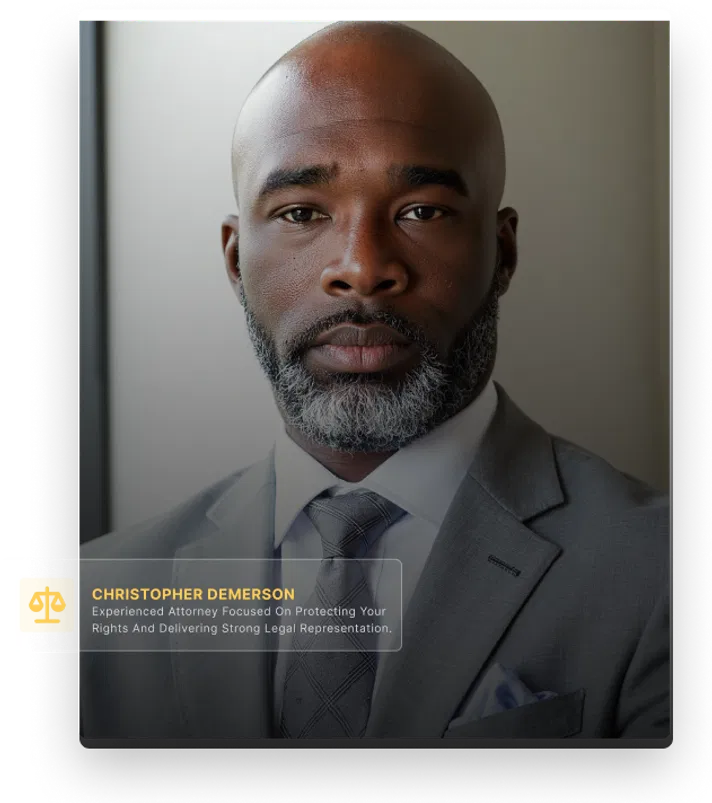
Christopher Demerson, attorney at The Demerson Firm, PLLC

Mistake #1: Thinking You Can Explain Your Way Out

This is the most common mistake in Texas criminal cases. Most people want to defend their reputation. "Tell me your side so we can clear this up" sounds like a way home.

It is not.

Officers are not required to be truthful with you during an interrogation. They may say they have DNA, witnesses, or video that does not exist, to see whether your account shifts. And it will shift, because you are stressed and recalling a chaotic event — at which point the inconsistency becomes the evidence.

What to do: Invoke, out loud. "I am going to remain silent, and I want a lawyer." That is not an admission of anything, and it is the only reliable protection. Being innocent does not make talking safe — in some ways it makes it more dangerous, because an innocent person feels free to keep talking.

Mistake #2: Consenting to Searches and Roadside Tests

Consent is how a great deal of evidence gets collected without a warrant. You can decline a search, and declining is not evidence of guilt. In a DWI stop the same principle applies to the roadside exercises.

Two points people get wrong. First, field sobriety tests are voluntary in Texas — nothing in Chapter 724 of the Transportation Code covers them, there is no license penalty for declining, and declining is not a crime. Second, breath and blood testing is different: § 724.011 deems a person arrested for DWI to have consented, but § 724.013 provides that a specimen may not be taken over a refusal outside the mandatory-draw situations in § 724.012. Refusing is not a crime either — but it carries a 180-day license suspension (two years with a prior alcohol- or drug-related enforcement contact in 10 years), the refusal is admissible at trial under § 724.061, and an officer can seek a blood warrant.

If a license suspension is in play, note the deadline that catches almost everyone: under § 724.041 you have 15 days from receiving notice to request an ALR hearing, and a timely request stays the suspension. Miss it and the suspension takes effect on the 40th day after notice under § 724.035(c) — typically before the criminal case has even been set.

Roadside tests are scored by an officer who already suspects impairment, under conditions that work against you. We cover how they are administered and where they break down in our guide to Texas field sobriety tests and what the law actually requires.

Nighttime roadside traffic stop in Houston during a DWI investigation

Mistake #3: Waiting to Involve a Lawyer

Many people wait for the first court setting, or to see how things develop, before involving counsel. That delay costs options that do not come back.

Brought in early, we can do pre-charge work. In some cases that means contacting the intake prosecutor before charges are formally filed and presenting information the offense report does not contain. This does not always change the outcome, and no honest lawyer will promise it will — but it is an opportunity that exists only briefly.

By the first setting, the State's position has usually settled. Earlier involvement means more room to work.

Mistake #4: Letting Evidence Age Out

Much of the evidence that helps a defendant is held by third parties on a retention schedule.

  • Private surveillance: Gas stations, bars, and businesses commonly run systems that overwrite within days. If footage shows you were not the aggressor, or shows how officers actually behaved, a preservation request has to reach the owner before the loop comes around.

  • Witnesses: People are easier to find and their recollection is fresher close to the event. Contact information gathered early is often the difference between a witness and a name nobody can locate.

  • Digital records: Location history, messages, and app data can corroborate where you were, but retention varies by provider and some of it is short.

A judge's gavel resting on a wooden sound block

Mistake #5: Discussing the Case on a Jail Phone

This one is heartbreaking to watch. Someone sitting in a county jail calls a spouse or a parent and says "I messed up, I shouldn't have been there" — meaning they regret the evening, not that they committed an offense.

Assume every jail call and video visit is recorded.

Recorded jail calls are routinely obtained by prosecutors and played for juries in Texas courtrooms. There is no privacy on a jail phone, with the exception of properly handled attorney calls. Talk to your family about how you are doing, who is handling things at home, and what needs sorting at work — not about the night in question, and not about what anyone should say.

What We Do in That Window

When we are retained early, these are the first moves:

  1. Put the representation on the record: We notify the agencies involved that you are represented and that any interview must go through us. Be clear on how this works, though — under Moran v. Burbine, a lawyer's notice to police does not itself invoke your rights. Only you can do that, which is why you must say it yourself and keep saying it.

  2. Work the bond: Article 17.15 of the Code of Criminal Procedure governs how bail is set, and the argument is stronger with concrete information about employment, residence, and family ties. Getting out of custody also makes it far easier to help build the defense.

  3. Send preservation letters: Formal notice to businesses and agencies not to destroy video or digital records, before retention periods expire.

  4. Become the point of contact: Communications route through us, which removes the opportunity for an unguarded remark to become evidence.

Attorneys reviewing case documents and preparing a defense strategy

Frequently Asked Questions

What if the police say they have a warrant?

Do not physically resist — resisting is a separate offense and turns one case into two. Ask to see the warrant if it is an entry or search, since you are entitled to know the authority being used. Then say clearly that you do not consent to any search beyond what the warrant authorizes, stay silent, and ask for a lawyer. A warrant does not take away your right to silence or to counsel, and objecting on the record preserves arguments about scope for later.

Can I be charged if police never read me my Miranda rights?

Yes. Contrary to what television suggests, the warnings attach to custodial interrogation — questioning while in custody. A failure to warn may make a statement inadmissible; it does not void the charges. Texas also has its own statutory rules for custodial statements in Article 38.22 of the Code of Criminal Procedure, which in some respects go further than Miranda — including requirements about recording and warnings for oral statements.

Do I need a lawyer for a minor charge?

Treat the word "minor" with suspicion. A Class B misdemeanor conviction in Texas can carry jail time, creates a permanent record that is not expungeable, and affects employment and licensing for years. The collateral effects usually outlast the sentence.

Should I request appointed counsel or hire a lawyer?

If you cannot afford a lawyer, request appointed counsel at magistration — that is your right under Article 1.051, and going unrepresented is the worst option available. Texas appointed counsel and public defender offices include very capable criminal lawyers. The practical difference is caseload and resources: a private firm can generally devote more hours per case and move faster in the first days, when preservation letters and pre-charge contact matter most. Whichever route you take, engage as early as you can and stay in communication with your lawyer.

Talk to a Houston Criminal Defense Lawyer

If you or someone in your family has been arrested in Texas, waiting is the costly option. The State is already working, and the evidence that helps you is on a clock nobody is holding for you.

Stay silent, ask for a lawyer, say nothing on the jail phone, and get someone working on the file.

Call (346) 344-2007 or visit demersonlegal.com. The Demerson Firm, PLLC, 8323 SW Freeway, Ste. 415, Houston, TX 77074. We handle criminal matters in Harris, Fort Bend, Montgomery, Brazoria, and Galveston Counties.


This article is provided for general informational purposes only and is not legal advice. Reading it does not create an attorney-client relationship with The Demerson Firm, PLLC. Texas law changes, and how these rules apply depends entirely on the facts of a particular case. Nothing here is advice about whether to refuse testing in your situation. If you have been arrested, speak with a licensed Texas attorney promptly — and note that the ALR deadline runs from the date of notice.

Comments


Apr 18
7 min read

Updated: Sep 4

The moment the handcuffs close, things move quickly. Whether it is a late-night DWI stop on the 610 Loop or a knock at the door about a felony investigation, the next 24 hours are the most consequential stretch of a criminal case — and most of what happens in them is decided by the person under arrest, not by a lawyer.

At The Demerson Firm, PLLC, we see the same avoidable mistakes constantly, made by people acting on adrenaline, fear, and what they remember from television. Here is what actually matters in that window.

Why the First 24 Hours Matter

Early on, the account of what happened is still forming. Once it hardens into an offense report and a charging decision, it is much harder to move.

Three things are happening at once:

  1. Evidence is being gathered — and lost: Law enforcement is building its case, while exculpatory material sitting on a private security system is running toward the end of its retention window.

  2. Statements are being recorded: Body-worn cameras, transport vehicles, intake areas, and jail phones. Assume you are on the record everywhere except a call with your lawyer.

  3. The charging decision is being made: A prosecutor reviews the offense report and decides what to accept and at what level. That review often happens well before a defendant has spoken to anyone.

Christopher Demerson, attorney at The Demerson Firm, PLLC

Mistake #1: Thinking You Can Explain Your Way Out

This is the most common mistake in Texas criminal cases. Most people want to defend their reputation. "Tell me your side so we can clear this up" sounds like a way home.

It is not.

Officers are not required to be truthful with you during an interrogation. They may say they have DNA, witnesses, or video that does not exist, to see whether your account shifts. And it will shift, because you are stressed and recalling a chaotic event — at which point the inconsistency becomes the evidence.

What to do: Invoke, out loud. "I am going to remain silent, and I want a lawyer." That is not an admission of anything, and it is the only reliable protection. Being innocent does not make talking safe — in some ways it makes it more dangerous, because an innocent person feels free to keep talking.

Mistake #2: Consenting to Searches and Roadside Tests

Consent is how a great deal of evidence gets collected without a warrant. You can decline a search, and declining is not evidence of guilt. In a DWI stop the same principle applies to the roadside exercises.

Two points people get wrong. First, field sobriety tests are voluntary in Texas — nothing in Chapter 724 of the Transportation Code covers them, there is no license penalty for declining, and declining is not a crime. Second, breath and blood testing is different: § 724.011 deems a person arrested for DWI to have consented, but § 724.013 provides that a specimen may not be taken over a refusal outside the mandatory-draw situations in § 724.012. Refusing is not a crime either — but it carries a 180-day license suspension (two years with a prior alcohol- or drug-related enforcement contact in 10 years), the refusal is admissible at trial under § 724.061, and an officer can seek a blood warrant.

If a license suspension is in play, note the deadline that catches almost everyone: under § 724.041 you have 15 days from receiving notice to request an ALR hearing, and a timely request stays the suspension. Miss it and the suspension takes effect on the 40th day after notice under § 724.035(c) — typically before the criminal case has even been set.

Roadside tests are scored by an officer who already suspects impairment, under conditions that work against you. We cover how they are administered and where they break down in our guide to Texas field sobriety tests and what the law actually requires.

Nighttime roadside traffic stop in Houston during a DWI investigation

Mistake #3: Waiting to Involve a Lawyer

Many people wait for the first court setting, or to see how things develop, before involving counsel. That delay costs options that do not come back.

Brought in early, we can do pre-charge work. In some cases that means contacting the intake prosecutor before charges are formally filed and presenting information the offense report does not contain. This does not always change the outcome, and no honest lawyer will promise it will — but it is an opportunity that exists only briefly.

By the first setting, the State's position has usually settled. Earlier involvement means more room to work.

Mistake #4: Letting Evidence Age Out

Much of the evidence that helps a defendant is held by third parties on a retention schedule.

  • Private surveillance: Gas stations, bars, and businesses commonly run systems that overwrite within days. If footage shows you were not the aggressor, or shows how officers actually behaved, a preservation request has to reach the owner before the loop comes around.

  • Witnesses: People are easier to find and their recollection is fresher close to the event. Contact information gathered early is often the difference between a witness and a name nobody can locate.

  • Digital records: Location history, messages, and app data can corroborate where you were, but retention varies by provider and some of it is short.

A judge's gavel resting on a wooden sound block

Mistake #5: Discussing the Case on a Jail Phone

This one is heartbreaking to watch. Someone sitting in a county jail calls a spouse or a parent and says "I messed up, I shouldn't have been there" — meaning they regret the evening, not that they committed an offense.

Assume every jail call and video visit is recorded.

Recorded jail calls are routinely obtained by prosecutors and played for juries in Texas courtrooms. There is no privacy on a jail phone, with the exception of properly handled attorney calls. Talk to your family about how you are doing, who is handling things at home, and what needs sorting at work — not about the night in question, and not about what anyone should say.

What We Do in That Window

When we are retained early, these are the first moves:

  1. Put the representation on the record: We notify the agencies involved that you are represented and that any interview must go through us. Be clear on how this works, though — under Moran v. Burbine, a lawyer's notice to police does not itself invoke your rights. Only you can do that, which is why you must say it yourself and keep saying it.

  2. Work the bond: Article 17.15 of the Code of Criminal Procedure governs how bail is set, and the argument is stronger with concrete information about employment, residence, and family ties. Getting out of custody also makes it far easier to help build the defense.

  3. Send preservation letters: Formal notice to businesses and agencies not to destroy video or digital records, before retention periods expire.

  4. Become the point of contact: Communications route through us, which removes the opportunity for an unguarded remark to become evidence.

Attorneys reviewing case documents and preparing a defense strategy

Frequently Asked Questions

What if the police say they have a warrant?

Do not physically resist — resisting is a separate offense and turns one case into two. Ask to see the warrant if it is an entry or search, since you are entitled to know the authority being used. Then say clearly that you do not consent to any search beyond what the warrant authorizes, stay silent, and ask for a lawyer. A warrant does not take away your right to silence or to counsel, and objecting on the record preserves arguments about scope for later.

Can I be charged if police never read me my Miranda rights?

Yes. Contrary to what television suggests, the warnings attach to custodial interrogation — questioning while in custody. A failure to warn may make a statement inadmissible; it does not void the charges. Texas also has its own statutory rules for custodial statements in Article 38.22 of the Code of Criminal Procedure, which in some respects go further than Miranda — including requirements about recording and warnings for oral statements.

Do I need a lawyer for a minor charge?

Treat the word "minor" with suspicion. A Class B misdemeanor conviction in Texas can carry jail time, creates a permanent record that is not expungeable, and affects employment and licensing for years. The collateral effects usually outlast the sentence.

Should I request appointed counsel or hire a lawyer?

If you cannot afford a lawyer, request appointed counsel at magistration — that is your right under Article 1.051, and going unrepresented is the worst option available. Texas appointed counsel and public defender offices include very capable criminal lawyers. The practical difference is caseload and resources: a private firm can generally devote more hours per case and move faster in the first days, when preservation letters and pre-charge contact matter most. Whichever route you take, engage as early as you can and stay in communication with your lawyer.

Talk to a Houston Criminal Defense Lawyer

If you or someone in your family has been arrested in Texas, waiting is the costly option. The State is already working, and the evidence that helps you is on a clock nobody is holding for you.

Stay silent, ask for a lawyer, say nothing on the jail phone, and get someone working on the file.

Call (346) 344-2007 or visit demersonlegal.com. The Demerson Firm, PLLC, 8323 SW Freeway, Ste. 415, Houston, TX 77074. We handle criminal matters in Harris, Fort Bend, Montgomery, Brazoria, and Galveston Counties.


This article is provided for general informational purposes only and is not legal advice. Reading it does not create an attorney-client relationship with The Demerson Firm, PLLC. Texas law changes, and how these rules apply depends entirely on the facts of a particular case. Nothing here is advice about whether to refuse testing in your situation. If you have been arrested, speak with a licensed Texas attorney promptly — and note that the ALR deadline runs from the date of notice.


Comments


bottom of page