
Recorded Statements After a Texas Car Accident: Why You Should Decline

Updated: Sep 3
The phone rings less than 24 hours after your collision on I-45 or the 610 Loop. The voice is calm and reassuring. They just want to get your side of the story so they can process the claim quickly. It sounds like progress. In practice, a recorded statement taken in the first days after a wreck — before you know the extent of your injuries and before anyone has reviewed the evidence — mostly creates a record the carrier can use later.
You are not required to give one to the other driver's insurance company. This article explains why adjusters want it, what Texas law actually says about your obligations, and what to say instead.
Key Takeaways
You Can Decline: Texas law imposes no obligation to give a recorded statement to the other driver's insurance company. Declining is not evidence of anything.
Statements Are Hard to Walk Back: Once recorded, an inconsistency — even one caused by shock, pain, or medication — becomes a credibility problem you have to explain.
Comparative Fault Is the Real Risk: A share of fault at or below 50% reduces your recovery proportionally; only a share greater than 50% eliminates it. An adjuster cannot deny a claim simply because you concede some responsibility — but every percentage point costs money.
Medical Uncertainty: Describing your injuries before a full diagnosis invites an argument later that whatever surfaced afterward came from somewhere else.
Your Own Carrier Is Different: Your policy probably contains a cooperation clause, which is a contractual duty rather than a legal one — and it still does not require you to speak without counsel or on the carrier's timetable.
Why Adjusters Want a Recorded Statement
A recorded statement is evidence. It is taken early, on the carrier's terms, by someone who does this every day, from someone who has been injured in the last day or two. Its practical function is to lock you into a version of events and a description of your injuries before either is fully known.

Question framing does most of the work. "You didn't see the other car until the last second, right?" is an invitation to agree to something that sounds like ordinary honesty and reads, in a claim file, as a failure to keep a proper lookout. You are answering questions written by someone who knows what the answers will be used for.
Timing compounds it. In the first days after a crash, adrenaline and shock routinely mask serious injuries, including traumatic brain injury and spinal damage. If you say "I'm okay, just sore" on day one and a herniated disc is diagnosed on day ten, that early statement becomes the carrier's argument that the disc was pre-existing. Nothing about that is dishonest on your part — it is simply what an early statement does.
The Texas Legal Framework: Comparative Fault
Texas applies modified comparative fault under Chapter 33 of the Civil Practice and Remedies Code. Section 33.001 provides that a claimant whose share of responsibility is greater than 50% recovers nothing. At 50% or less, the recovery is reduced by that percentage rather than denied. This is the "51% bar," and it is why a recorded statement matters more in Texas than people assume.
Be clear about what that means, because it is frequently overstated. An insurer cannot deny your claim merely because you concede partial fault — partial fault reduces, it does not bar. What it does is move money. Under Texas negligence law and the 51% rule, a jury finding you 20% responsible because of an offhand comment about being in a hurry turns a $100,000 verdict into $80,000. Push that share past 50% and the claim is gone entirely. Adjusters are practiced at building toward a percentage through conversation that does not feel adversarial.
In Harris County, where traffic on the Katy Freeway is among the densest in the country, liability is rarely clean. That is exactly why the account of the crash should be built from the crash report, the physical evidence, and any available video — not from a recorded interview conducted before your lawyer has seen any of it.
Quick Facts: The Rules That Apply
No obligation to the other side: Nothing in Texas law requires you to give a recorded statement to the at-fault driver's insurer.
The 51% bar: Under Tex. Civ. Prac. & Rem. Code § 33.001, a share of responsibility greater than 50% bars recovery; at 50% or less it reduces the award proportionally.
Your own carrier: A cooperation clause is a term of your policy, not a statute. It does not require an immediate statement, and it does not prevent you from having counsel involved. Statements to your own carrier matter too, particularly in an uninsured or underinsured motorist claim where that carrier eventually stands in the shoes of the defendant.
Two years: The limitations period under Tex. Civ. Prac. & Rem. Code § 16.003(a). Declining a recorded statement does not pause it, and neither does an ongoing negotiation.
What to Do Instead
Routing communications through a Houston car accident lawyer puts a professional between you and a process designed around the carrier's interests. You are still cooperating — you are simply not doing it live, unprepared, and on day two.

Declining the statement and directing the adjuster to your attorney lets your legal team:
Let the medical record speak: Your injuries get described by treating physicians rather than by your own guess in week one.
Review the evidence first: Dashcam footage, witness accounts, the crash report, and black box data from 18-wheeler accidents should inform your account of the crash, not the other way around.
Respond in writing where appropriate: A written response can be checked for accuracy before it is sent, which a live recording cannot.
Your job after a wreck is to get medical care and get better. Handling the carrier is work someone else can do.
Valuing the Claim: Beyond the First Offer
Valuing a Texas injury claim means documenting medical expenses, lost income and earning capacity, and non-economic damages — all of which are easy to undervalue if an early recorded statement has already minimized the injuries. An early offer is usually built on what is known in week one, which is rarely the whole picture.

A quick check plus medicals-to-date can look reasonable until you learn that soft tissue and nerve injuries often need months of therapy, and sometimes surgery that no one anticipated at the emergency room. Once you sign a release, that is the end of the claim — including for treatment that has not happened yet. Note as well that Tex. Civ. Prac. & Rem. Code § 41.0105 limits recovery of medical expenses to the amount actually paid or incurred, so the billed total and the recoverable figure are not the same number.
A properly built demand accounts for:
Past and future medical expenses: Imaging, surgery, rehabilitation, and ongoing care.
Lost earning capacity: Particularly where an injury prevents a return to physically demanding work.
Physical pain, impairment, and mental anguish: The non-economic losses, which a jury — not a formula — decides.
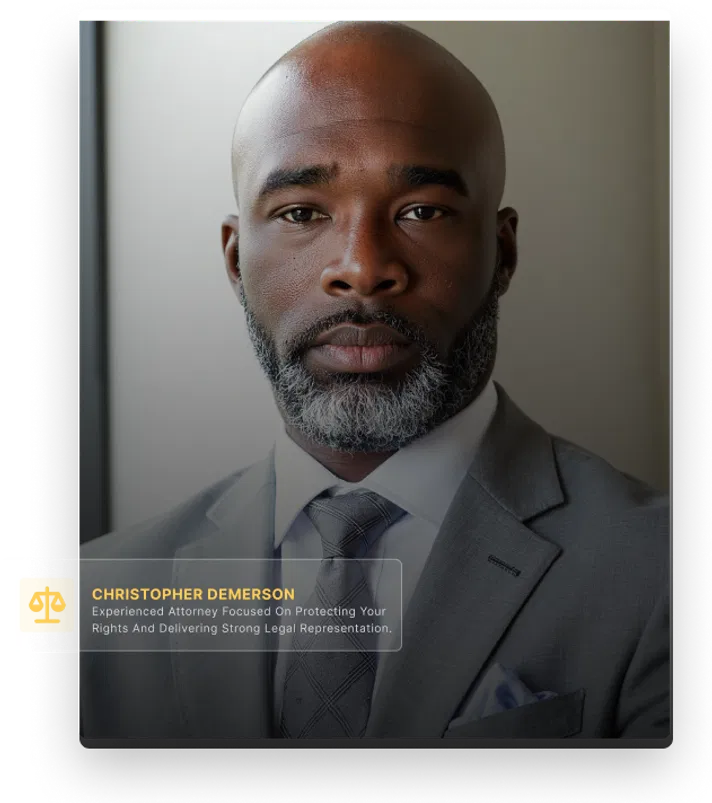
Partnering with The Demerson Firm, PLLC
We take over communications with the carriers so that you are not negotiating while you are recovering, and we build the account of the crash from evidence rather than from an early interview.
If you have just been in a wreck, our guide to Texas motor vehicle accident claims covers the deadlines and the early steps. Then talk to us before you talk to an adjuster.
Call (346) 344-2007, book a consultation online, or visit our contact page. The Demerson Firm, PLLC, 8323 SW Freeway, Ste. 415, Houston, TX 77074.
Frequently Asked Questions
1. Am I required to give a recorded statement to the other driver's insurer?
No. Texas law imposes no such obligation. You may decline politely and refer them to your attorney. Declining is not an admission and cannot be used as one.
2. What if my own insurance company asks for a statement?
That is a different situation. Your policy almost certainly contains a cooperation clause, which is a contractual obligation to your own carrier. But it does not require a statement immediately, on their schedule, or without your lawyer involved. This matters most in an uninsured or underinsured motorist claim, where your own carrier is effectively the party you are making a claim against — talk to a Houston car accident lawyer before that conversation.
3. Can I take back something I said in a recorded statement?
Not cleanly. You can clarify later, but the carrier will point to the difference between the two accounts. That is why the first version matters so much, and why it should not be given before you know the facts and your medical situation.
4. Why not just tell the truth? I have nothing to hide.
This is the right instinct and it is not the issue. Truthful answers can still be framed against you. "Were you distracted?" — "No, I was just thinking about my grocery list." What gets written down is: driver was mentally distracted and not focused on the road. Declining a recorded statement is not hiding anything; it is declining to have your words summarized by the other side.
5. What should I say if an adjuster calls me today?
Something like: "I'm not going to give a statement right now. Please direct any questions about this claim to my attorney." Give them the firm's name and number. You can be polite and still say no — you do not owe an explanation.
6. Will adjusters use my medical history against me?
They will look at it. An offhand mention of old back pain or a college sports injury becomes the basis for arguing that your current condition is pre-existing rather than caused by the crash. Prior conditions do not defeat a claim — Texas law addresses aggravation of a pre-existing condition — but the argument is easier for them to make if you volunteered the material yourself.
7. Once I hire a lawyer, can the insurance company still contact me?
We take over the communications, and in practice most carriers route everything through counsel once representation is on file. But it is worth being precise, because this point is widely overstated online: there is no Texas statute that forbids an insurance adjuster from calling you directly. The rule restricting communication with a represented person — Rule 4.02 of the Texas Disciplinary Rules of Professional Conduct — governs lawyers, not adjusters. So if an adjuster does reach you after you have hired counsel, they have not necessarily violated anything. Tell them you are represented, give them the firm's name, end the call, and let us know it happened.
This article is provided for general informational purposes only and is not legal advice. Reading it does not create an attorney-client relationship with The Demerson Firm, PLLC. Texas law changes, and how these rules apply depends on the facts of a particular claim — including the terms of your own insurance policy. Speak with a licensed Texas attorney about your situation before giving any statement.
Comments