top of page
The-Demerson-Firm-logo

CALL NOW . Available 24/7

(346) 344-2007

7 Mistakes You’re Making with Texas DWI Charges (and How to Fix Them Before Your First Court Date)

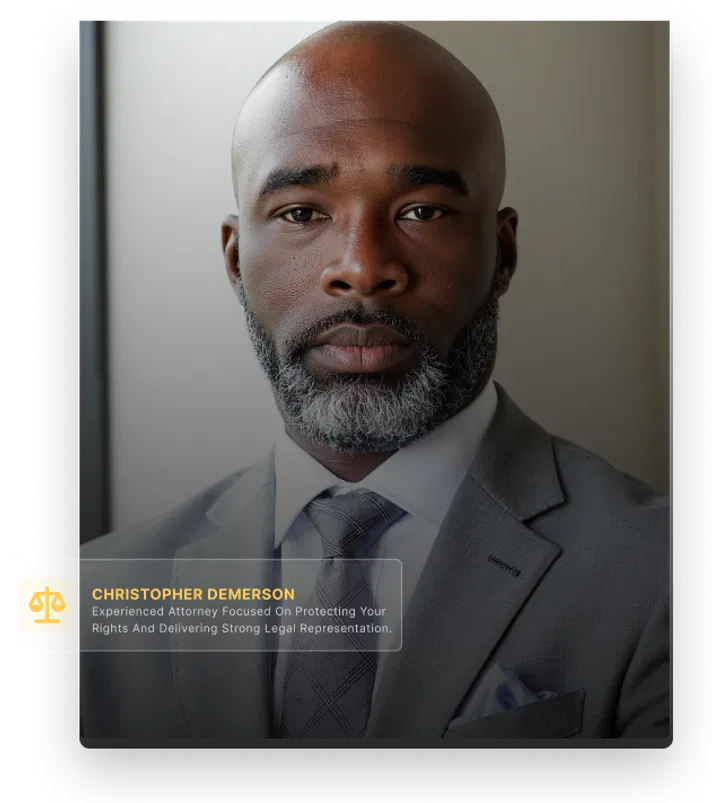
  • Writer: Christopher Demerson
    Christopher Demerson
  • 4 days ago
  • 6 min read

Updated: 2 days ago


A DWI arrest in Texas is a high-stakes encounter with a legal system designed for efficiency, not necessarily for your exoneration. From the moment the flashing lights appear in your rearview mirror on a Houston freeway to the second you walk into a Harris County courtroom, every decision you make is either building your defense or fortifying the prosecution’s case.

At The Demerson Firm, PLLC, we see many individuals approach their first court date under the impression that the "real" legal work begins in front of the judge. This is a critical misconception. In the realm of Texas criminal defense, the most significant victories often happen in the weeks preceding that first appearance. If you are currently facing charges, you are likely making tactical errors that could jeopardize your freedom, your driving privileges, and your professional reputation.

Here are the seven most common mistakes defendants make with Texas DWI charges and the strategic "fixes" required to regain control of your case.

1. Missing the 15-Day ALR Hearing Deadline

In Texas, a DWI arrest triggers two separate legal battles: a criminal case and a civil administrative case. Most people focus entirely on the criminal charge while ignoring the Administrative License Revocation (ALR) process.

The Mistake: Failing to request an ALR hearing within 15 days of your arrest. If you miss this window, your driver’s license will be automatically suspended 40 days after the arrest, regardless of the eventual outcome of your criminal case.

The Fix: You must request an ALR hearing immediately. This is not just about keeping your license; it is a vital discovery tool. The ALR hearing allows your attorney to cross-examine the arresting officer under oath before the criminal trial begins. This often reveals inconsistencies in the officer’s testimony or weaknesses in the probable cause for the stop.

A Texas driver's license and wristwatch on a legal desk, highlighting the 15-day ALR hearing deadline for DWI charges.

2. The "Gift of Gab": Attempting to Talk Your Way Out of Charges

Texas law enforcement officers are trained in "interview and interrogation" techniques designed to elicit admissions of guilt disguised as casual conversation.

The Mistake: Attempting to explain how many drinks you had, where you were coming from, or apologizing to the officer. Many defendants believe that being "cooperative" will lead to leniency. In reality, every word you speak is recorded on body-worn cameras and dashcams, serving as foundational evidence for the prosecution.

The Fix: Invoke your Fifth Amendment rights immediately and politely. Say, "I am exercising my right to remain silent and I wish to speak with my attorney." Once this is invoked, questioning must cease. This limits the "subjective" evidence, like slurred speech or contradictory statements, that prosecutors rely on when objective evidence (like blood results) is weak.

3. Misunderstanding the "Implied Consent" Trap

Texas is an "implied consent" state. This means that by virtue of having a driver's license, you have technically already consented to a breath or blood test if you are arrested for DWI.

The Mistake: Refusing a test without understanding the consequences, or conversely, believing that a "failed" test makes your case unwinnable. Refusal leads to a longer license suspension (180 days for a first offense), but providing a sample gives the state scientific data that is often difficult, though not impossible, to challenge.

The Fix: Whether you refused or provided a sample, the "fix" is to have a legal expert scrutinize the methodology. If you provided blood, we look for "chain of custody" errors or fermentation issues in the vial. If you provided breath, we analyze the Intoxilyzer 9000’s maintenance logs. As a firm that understands the proven Texas legal framework for complex litigation, we apply that same intellectual rigor to forensic evidence in DWI cases.

4. Treating the First Court Date as the "Starting Point"

Many defendants wait until their first court date (the arraignment) to even consider hiring an attorney. They view the first date as a "check-in."

The Mistake: Treating the period between arrest and the first court date as "downtime." By the time you reach your first setting, the prosecution has already begun compiling their file, and digital evidence (like patrol car video) may already be at risk of being overwritten if not properly subpoenaed.

The Fix: Retention of counsel should happen within 48 hours of release. Early intervention allows your attorney to file "Motions to Preserve Evidence" and "Brady Motions," ensuring that any exculpatory evidence, evidence that proves your innocence, is not "lost" by the police department.

Case Review

5. Failing to Challenge the "Standardized" Field Sobriety Tests (SFSTs)

Police officers often present Field Sobriety Tests (the walk-and-turn, the one-leg stand, and the horizontal gaze nystagmus) as infallible scientific indicators of intoxication.

The Mistake: Assuming that because the officer said you "failed," the jury will believe it. SFSTs are highly subjective and are frequently administered incorrectly. Factors like wind, uneven pavement, improper footwear, or pre-existing medical conditions (like back or inner-ear issues) can all cause a "failure" in a perfectly sober individual.

The Fix: We review the arrest video with a microscopic lens to ensure the officer followed the strict National Highway Traffic Safety Administration (NHTSA) guidelines. Any deviation from these standards can render the test results inadmissible or significantly diminish their weight in court.

6. Ignoring the Legality of the Initial Traffic Stop

The Fourth Amendment protects you against unreasonable searches and seizures. In a DWI context, the officer must have "reasonable suspicion" to pull you over and "probable cause" to arrest you.

The Mistake: Assuming the officer had a valid reason to stop you. Often, stops are made based on "hunches" or minor technicalities that don't actually hold up under legal scrutiny.

The Fix: Your attorney should file a "Motion to Suppress." If we can prove the initial stop was illegal, perhaps you didn't actually cross the fog line, or your taillight wasn't actually out, then every piece of evidence gathered after that stop (the breath test, the video, the statements) can be "thrown out" under the "Fruit of the Poisonous Tree" doctrine.

7. Discussing Your Case on Social Media or with Friends

In the age of digital discovery, your "private" life is often accessible to the District Attorney's office.

The Mistake: Posting about your arrest, complaining about the police, or even posting photos of yourself out at dinner shortly after the incident. Prosecutors regularly search social media for any evidence that contradicts your defense or shows a "pattern of behavior."

The Fix: Go dark. Do not discuss the details of your case with anyone except your attorney. Even well-meaning friends can be subpoenaed to testify about what you told them. Attorney-client privilege is your only ironclad protection.

Lady Justice

Why The Demerson Firm, PLLC Approaches DWI Differently

At The Demerson Firm, PLLC, we don't just "process" cases; we litigate them. Whether we are serving as a Houston car accident lawyer for an injury victim or defending a citizen against a DWI charge, our approach remains rooted in disciplined advocacy. We understand that a DWI is more than a ticket; it is a threat to your future.

If you have been arrested, the clock is already ticking on your 15-day ALR deadline. Do not let these common mistakes dictate the rest of your life.

Frequently Asked Questions

Can I get a DWI even if my BAC was under 0.08? Yes. In Texas, "intoxication" is defined as not having the normal use of mental or physical faculties by reason of the introduction of alcohol (or drugs) OR having a BAC of 0.08 or more. Prosecutors can still charge you based on your performance on field sobriety tests.

What is an Occupational Driver's License (ODL)? If your license is suspended, an ODL allows you to drive to essential places like work, school, or to perform household duties. This requires a specific petition to the court and is a process we handle frequently for our clients.

Will I have to go to jail for a first-time DWI in Houston? While a Class B Misdemeanor DWI carries a potential jail sentence of up to 180 days, many first-time offenders are eligible for community supervision (probation) or deferred adjudication, depending on the circumstances of the case and the quality of their legal defense.

How does Texas negligence law affect my case if there was an accident? If your DWI involved an accident, you may face enhanced criminal charges (like Intoxication Assault) and civil liability. Understanding how Texas negligence law values claims is essential if you are facing a dual-front legal battle.

Secure Your Defense Today

The moments following a DWI arrest are filled with confusion and stress, but they are also the moments where your defense is strongest. By avoiding these seven mistakes and securing experienced counsel, you position yourself for the best possible outcome.

Contact The Demerson Firm, PLLC today to schedule a consultation. Let us apply our meticulous approach to your defense and fight to protect your rights in and out of the courtroom. Visit our blog for more insights on Texas law and strategic advocacy.

Comments


  • 4 days ago
  • 6 min read

Updated: 2 days ago


A DWI arrest in Texas is a high-stakes encounter with a legal system designed for efficiency, not necessarily for your exoneration. From the moment the flashing lights appear in your rearview mirror on a Houston freeway to the second you walk into a Harris County courtroom, every decision you make is either building your defense or fortifying the prosecution’s case.

At The Demerson Firm, PLLC, we see many individuals approach their first court date under the impression that the "real" legal work begins in front of the judge. This is a critical misconception. In the realm of Texas criminal defense, the most significant victories often happen in the weeks preceding that first appearance. If you are currently facing charges, you are likely making tactical errors that could jeopardize your freedom, your driving privileges, and your professional reputation.

Here are the seven most common mistakes defendants make with Texas DWI charges and the strategic "fixes" required to regain control of your case.

1. Missing the 15-Day ALR Hearing Deadline

In Texas, a DWI arrest triggers two separate legal battles: a criminal case and a civil administrative case. Most people focus entirely on the criminal charge while ignoring the Administrative License Revocation (ALR) process.

The Mistake: Failing to request an ALR hearing within 15 days of your arrest. If you miss this window, your driver’s license will be automatically suspended 40 days after the arrest, regardless of the eventual outcome of your criminal case.

The Fix: You must request an ALR hearing immediately. This is not just about keeping your license; it is a vital discovery tool. The ALR hearing allows your attorney to cross-examine the arresting officer under oath before the criminal trial begins. This often reveals inconsistencies in the officer’s testimony or weaknesses in the probable cause for the stop.

A Texas driver's license and wristwatch on a legal desk, highlighting the 15-day ALR hearing deadline for DWI charges.

2. The "Gift of Gab": Attempting to Talk Your Way Out of Charges

Texas law enforcement officers are trained in "interview and interrogation" techniques designed to elicit admissions of guilt disguised as casual conversation.

The Mistake: Attempting to explain how many drinks you had, where you were coming from, or apologizing to the officer. Many defendants believe that being "cooperative" will lead to leniency. In reality, every word you speak is recorded on body-worn cameras and dashcams, serving as foundational evidence for the prosecution.

The Fix: Invoke your Fifth Amendment rights immediately and politely. Say, "I am exercising my right to remain silent and I wish to speak with my attorney." Once this is invoked, questioning must cease. This limits the "subjective" evidence, like slurred speech or contradictory statements, that prosecutors rely on when objective evidence (like blood results) is weak.

3. Misunderstanding the "Implied Consent" Trap

Texas is an "implied consent" state. This means that by virtue of having a driver's license, you have technically already consented to a breath or blood test if you are arrested for DWI.

The Mistake: Refusing a test without understanding the consequences, or conversely, believing that a "failed" test makes your case unwinnable. Refusal leads to a longer license suspension (180 days for a first offense), but providing a sample gives the state scientific data that is often difficult, though not impossible, to challenge.

The Fix: Whether you refused or provided a sample, the "fix" is to have a legal expert scrutinize the methodology. If you provided blood, we look for "chain of custody" errors or fermentation issues in the vial. If you provided breath, we analyze the Intoxilyzer 9000’s maintenance logs. As a firm that understands the proven Texas legal framework for complex litigation, we apply that same intellectual rigor to forensic evidence in DWI cases.

4. Treating the First Court Date as the "Starting Point"

Many defendants wait until their first court date (the arraignment) to even consider hiring an attorney. They view the first date as a "check-in."

The Mistake: Treating the period between arrest and the first court date as "downtime." By the time you reach your first setting, the prosecution has already begun compiling their file, and digital evidence (like patrol car video) may already be at risk of being overwritten if not properly subpoenaed.

The Fix: Retention of counsel should happen within 48 hours of release. Early intervention allows your attorney to file "Motions to Preserve Evidence" and "Brady Motions," ensuring that any exculpatory evidence, evidence that proves your innocence, is not "lost" by the police department.

Case Review

5. Failing to Challenge the "Standardized" Field Sobriety Tests (SFSTs)

Police officers often present Field Sobriety Tests (the walk-and-turn, the one-leg stand, and the horizontal gaze nystagmus) as infallible scientific indicators of intoxication.

The Mistake: Assuming that because the officer said you "failed," the jury will believe it. SFSTs are highly subjective and are frequently administered incorrectly. Factors like wind, uneven pavement, improper footwear, or pre-existing medical conditions (like back or inner-ear issues) can all cause a "failure" in a perfectly sober individual.

The Fix: We review the arrest video with a microscopic lens to ensure the officer followed the strict National Highway Traffic Safety Administration (NHTSA) guidelines. Any deviation from these standards can render the test results inadmissible or significantly diminish their weight in court.

6. Ignoring the Legality of the Initial Traffic Stop

The Fourth Amendment protects you against unreasonable searches and seizures. In a DWI context, the officer must have "reasonable suspicion" to pull you over and "probable cause" to arrest you.

The Mistake: Assuming the officer had a valid reason to stop you. Often, stops are made based on "hunches" or minor technicalities that don't actually hold up under legal scrutiny.

The Fix: Your attorney should file a "Motion to Suppress." If we can prove the initial stop was illegal, perhaps you didn't actually cross the fog line, or your taillight wasn't actually out, then every piece of evidence gathered after that stop (the breath test, the video, the statements) can be "thrown out" under the "Fruit of the Poisonous Tree" doctrine.

7. Discussing Your Case on Social Media or with Friends

In the age of digital discovery, your "private" life is often accessible to the District Attorney's office.

The Mistake: Posting about your arrest, complaining about the police, or even posting photos of yourself out at dinner shortly after the incident. Prosecutors regularly search social media for any evidence that contradicts your defense or shows a "pattern of behavior."

The Fix: Go dark. Do not discuss the details of your case with anyone except your attorney. Even well-meaning friends can be subpoenaed to testify about what you told them. Attorney-client privilege is your only ironclad protection.

Lady Justice

Why The Demerson Firm, PLLC Approaches DWI Differently

At The Demerson Firm, PLLC, we don't just "process" cases; we litigate them. Whether we are serving as a Houston car accident lawyer for an injury victim or defending a citizen against a DWI charge, our approach remains rooted in disciplined advocacy. We understand that a DWI is more than a ticket; it is a threat to your future.

If you have been arrested, the clock is already ticking on your 15-day ALR deadline. Do not let these common mistakes dictate the rest of your life.

Frequently Asked Questions

Can I get a DWI even if my BAC was under 0.08? Yes. In Texas, "intoxication" is defined as not having the normal use of mental or physical faculties by reason of the introduction of alcohol (or drugs) OR having a BAC of 0.08 or more. Prosecutors can still charge you based on your performance on field sobriety tests.

What is an Occupational Driver's License (ODL)? If your license is suspended, an ODL allows you to drive to essential places like work, school, or to perform household duties. This requires a specific petition to the court and is a process we handle frequently for our clients.

Will I have to go to jail for a first-time DWI in Houston? While a Class B Misdemeanor DWI carries a potential jail sentence of up to 180 days, many first-time offenders are eligible for community supervision (probation) or deferred adjudication, depending on the circumstances of the case and the quality of their legal defense.

How does Texas negligence law affect my case if there was an accident? If your DWI involved an accident, you may face enhanced criminal charges (like Intoxication Assault) and civil liability. Understanding how Texas negligence law values claims is essential if you are facing a dual-front legal battle.

Secure Your Defense Today

The moments following a DWI arrest are filled with confusion and stress, but they are also the moments where your defense is strongest. By avoiding these seven mistakes and securing experienced counsel, you position yourself for the best possible outcome.

Contact The Demerson Firm, PLLC today to schedule a consultation. Let us apply our meticulous approach to your defense and fight to protect your rights in and out of the courtroom. Visit our blog for more insights on Texas law and strategic advocacy.

Comments


bottom of page