
Texas Search and Seizure Explained: Can Police Search Your Car Just Because They Smell Marijuana?

Updated: Sep 4
If a police officer pulls you over on a Houston freeway and says he smells marijuana in your car, can he search it? In Texas, as of today, the answer is almost certainly yes — and that surprises a lot of people, because hemp has been legal here since 2019 and nobody can tell legal hemp from illegal marijuana by smell.
That contradiction is real, and it is worth understanding — but you will find a lot of confident writing online claiming the hemp law killed odor-based car searches in Texas. It did not. Every Texas appellate court that has decided the question since 2019 has held that the odor of marijuana still supplies probable cause to search a vehicle. What the hemp law actually changed is something different, and in practice more useful to a defendant: it made these cases much harder for the State to prove.
Below is an honest account of where Texas law stands — what the courts have held, what argument is still open, and where the real leverage in these cases actually sits.
The Constitutional Foundation: The Fourth Amendment and the Automobile Exception
The Fourth Amendment protects against "unreasonable searches and seizures." As a general rule, officers need a warrant supported by probable cause to search private property.
Cars are the classic exception. In Carroll v. United States, the Supreme Court established the "automobile exception": because vehicles are mobile and carry a reduced expectation of privacy, police may search one without a warrant if they have probable cause to believe it contains contraband. Note the structure of that rule, because it matters later — the odor supplies the probable cause, and it is the car's mobility that excuses the warrant.
Texas courts have said for nearly fifty years that the smell of marijuana does that work. In Moulden v. State, 576 S.W.2d 817 (Tex. Crim. App. 1978), officers stopped a speeding car, smelled burnt marijuana, and searched both the vehicle and a closed bag inside it. The Court of Criminal Appeals upheld the search. Two decades later, in Small v. State, 977 S.W.2d 771 (Tex. App.—Fort Worth 1998, no pet.), the court put it plainly: the odor of marijuana alone is sufficient to constitute probable cause to search a person, a vehicle, or objects within the vehicle. (Worth noting: the actual result in Small also rested on a furtive movement toward the defendant's waistband, not odor in isolation.)

What HB 1325 Actually Changed
In June 2019, Governor Abbott signed House Bill 1325, legalizing hemp production and hemp-derived products in Texas. The distinction the law draws between legal hemp and illegal marijuana is purely chemical, and it is defined in Tex. Agric. Code § 121.001:
Marijuana: Cannabis with a delta-9 THC concentration of more than 0.3% on a dry weight basis.
Hemp: Cannabis with a delta-9 THC concentration of not more than 0.3% on a dry weight basis.
The same legislation also removed hemp from the statutory definition of "marihuana" in Tex. Health & Safety Code § 481.002(26)(F). And here is the conundrum: hemp and marijuana look the same and smell exactly the same.
Neither a human officer nor a drug-sniffing K-9 can tell legal hemp from illegal marijuana by odor. So the natural question is whether that smell still amounts to probable cause — a "fair probability" that a crime has been committed — when the substance producing it may be perfectly lawful.
Where Texas Courts Have Actually Landed
This is where a lot of online commentary gets it wrong. Every Texas court of appeals to publish a decision on the question since 2019 has held that the odor of marijuana still establishes probable cause to search a vehicle, notwithstanding the hemp law.
The leading case is State v. Gonzales, 676 S.W.3d 261 (Tex. App.—Dallas 2023, no pet.). The trial judge there had granted a motion to suppress on exactly the argument described above, reasoning that HB 1325 had undercut the old odor cases. The Dallas Court of Appeals reversed, on three grounds: probable cause deals in probabilities rather than certainties, so an officer need not rule out hemp before searching; marijuana remains illegal in Texas, so its odor still suggests criminal activity; and Tex. Agric. Code § 122.358(d) expressly provides that the hemp law does not limit peace officers from enforcing the state's marijuana laws. The San Antonio Court of Appeals reached the same result in Isaac v. State, 675 S.W.3d 116 (Tex. App.—San Antonio 2023, no pet.), and the Amarillo and Tyler courts have followed in unpublished decisions.
Two things keep this from being settled, though. First, the Texas Court of Criminal Appeals — our highest criminal court — has never decided the question. Until it does, the issue remains genuinely open at the top of the system. Second, trial judges have gone the other way: the judges in Gonzales and in a 2022 Dallas case both suppressed the evidence, and both were reversed on appeal. The argument is worth preserving in the record. It is not, at present, a winner on appeal.
The Defense Argument, and Why It Still Gets Made
The argument runs like this: because hemp is legal and smells identical to marijuana, the odor of cannabis no longer points only to criminal activity, so odor standing alone should not establish a fair probability that a crime is occurring. Courts of appeals have rejected it so far. But preserving it matters — an issue the Court of Criminal Appeals has not addressed is an issue that can still be won, and it cannot be raised later if it was never raised below.
The related point does have traction: probable cause is assessed on the totality of the circumstances. Where the officer smelled cannabis and saw paraphernalia, or noted signs of impairment, the State's position is stronger. Where the report says nothing but "odor of marijuana" and the body-worn camera shows an officer who never mentions the smell until after the search began, that is a record worth attacking.
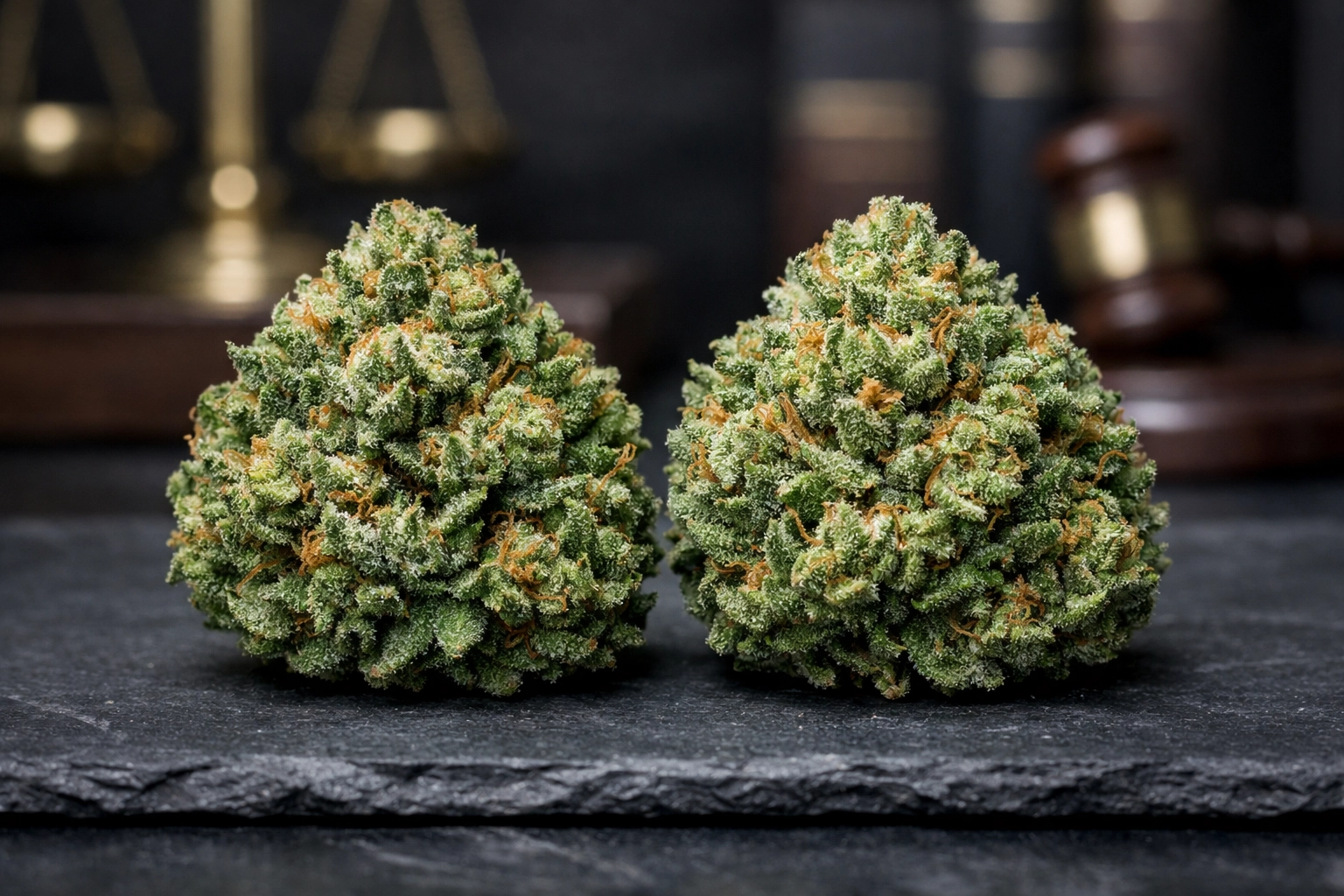
The Real Leverage: The State Still Has to Prove It
Here is the part that actually wins cases, and it has nothing to do with suppression. Since hemp is defined by THC concentration, the State must prove beyond a reasonable doubt that what you had contained more than 0.3% delta-9 THC. That takes laboratory quantitation — not an officer's opinion, not a field test.
After HB 1325 passed, the Department of Public Safety advised agencies that state labs would not test misdemeanor marijuana cases, because the Legislature had funded THC quantitation for felonies only. Prosecutors across Texas dismissed or declined large numbers of misdemeanor cases as a result. Lab capacity has since expanded, but it remains a constraint, and the burden has not moved. That is a proof problem for the State, and it is where a defense often has the most room.
So the honest summary is this: the hemp law did not take away an officer's ability to search your car over a smell. It did make the case against you meaningfully harder to prove.
Searching the Vehicle vs. Searching the Person vs. Searching a Home
The place matters enormously, and this is where the law genuinely does favor you.
A home is not a car. In State v. Steelman, 93 S.W.3d 102 (Tex. Crim. App. 2002), officers smelled burnt marijuana when a resident opened the door, forced their way in, and arrested everyone inside. The Court of Criminal Appeals held the evidence was properly suppressed: the odor of marijuana, standing alone, does not authorize a warrantless search and seizure in a home, and it did not give officers particularized probable cause that these specific people had committed an offense in the officers' presence. The reason cars come out differently is the automobile exception — mobility excuses the warrant that a home requires.
Passengers are a middle case. Probable cause to search a vehicle does not automatically authorize a full search of every person in it; searching a person generally requires probable cause particular to that person. If you were a passenger who got patted down and emptied out because the car smelled, that is worth a hard look.
The Role of Drug-Sniffing Dogs
Texas agencies use K-9 units routinely on traffic stops. Most dogs in service were trained to alert on cannabis generally, not on THC concentration above 0.3% — so a dog has the same blind spot a human nose does.
Texas courts have so far treated a K-9 alert the way they treat human odor detection, so do not expect the hemp argument alone to defeat one. What is worth examining is the dog itself: certification history, training records, handler cueing, false-alert rate, and the timing of the alert relative to the length of the stop. A stop that was extended past its purpose to wait for a dog raises a separate and often stronger issue.

What to Do If You Are Pulled Over in Houston
If a Houston Police officer or a Harris County deputy says he smells marijuana in your car, what you do in the next few minutes shapes the rest of the case.
Stay calm and courteous. Agitation gets written into the report as suspicious behavior and becomes part of the totality the State relies on later.
Do not consent to a search. If you are asked "do you mind if I look around?", say clearly and politely: "I do not consent to any searches." Consent waives the argument entirely. Withholding it preserves every issue in this article.
Exercise your right to remain silent. You must provide identification and insurance. Beyond that you need not answer questions about where you are going or what you have been doing. You can say, "I am exercising my right to remain silent and I would like to speak with an attorney."
Do not resist. If the officer searches anyway, let him. The place to fight this is a courtroom, not the shoulder of I-10.
What We Look At in These Cases
Texas cannabis law is unsettled and the details carry real weight. At The Demerson Firm, PLLC, the questions we work through include:
Was the initial traffic stop lawful, and was it extended beyond its purpose?
At what point did the officer first claim to smell marijuana — and does the body-worn camera support it?
Was a K-9 used, and what does its certification and training history show?
Burnt or raw? The distinction affects what the officer could plausibly have detected and from where.
Has the substance actually been lab-tested for delta-9 THC concentration, and what does the report say?
Frequently Asked Questions
1. Is marijuana legal in Houston?
No. Marijuana remains illegal under Texas state law. Some local prosecutors have adopted diversion programs or declination policies for small amounts, but a policy is not a law and it can change. Hemp, defined as cannabis at or below 0.3% delta-9 THC, is legal.
2. Can I be arrested if what I have is legal CBD or hemp?
It happens. Legal hemp and illegal marijuana are indistinguishable by sight and smell, so officers sometimes arrest and let the lab sort it out later. Keep your receipts and any certificate of analysis for hemp products you purchased — that documentation can matter early, when it is still possible to head a case off before charges are filed.
3. Can I get my case dismissed if the search was based only on smell?
Be careful with anyone who promises this. A motion to suppress arguing that hemp legalization destroyed odor-based probable cause has been rejected by every Texas court of appeals to publish on it, though some trial judges have granted it. It is still worth filing where the facts support it, both because trial courts sometimes agree and because the Court of Criminal Appeals has not ruled. But in practice, cases in this posture are more often resolved through the State's difficulty proving THC concentration, or through defects in the stop itself, than through the odor argument. What happens in your case depends on your facts.
4. Does the same rule apply to my home?
No, and the difference is significant. Under State v. Steelman, the smell of marijuana alone does not authorize officers to enter your home without a warrant. They may be able to use the odor as part of an application for a warrant, but that is a different thing than walking in.
5. Didn't Dallas voters end odor-based searches?
Dallas voters passed Proposition R in November 2024, which would have barred Dallas police from treating marijuana odor as probable cause. The Attorney General sued, an appellate court sided with the State in 2025, and enforcement has been on hold since. No Texas city has actually eliminated odor-based probable cause, and none of this applies in Harris County.
The Bottom Line
In Texas today, the smell of marijuana still lets an officer search your car. Hemp legalization did not change that, whatever you may read elsewhere. What it did change is the State's burden at the back end, and that is where these cases are often won — along with the lawfulness of the stop, the length of the detention, and whether the officer's account holds up against the video.
If you were searched or arrested after a traffic stop in Harris County or anywhere in the Houston area, the specifics matter more than the general rule. Get the report, get the video, and get someone to read them carefully.
Contact The Demerson Firm, PLLC at (346) 344-2007 to discuss your case.

The Demerson Firm, PLLC · 8323 SW Freeway, Ste. 415, Houston, TX 77074 · (346) 344-2007 · chris.demerson@demersonlegal.com
This article is general information about Texas law as of September 2026. It is not legal advice, and reading it does not create an attorney-client relationship. Cannabis law in Texas is actively changing and the outcome of any case depends on its specific facts. For advice about your situation, contact The Demerson Firm, PLLC at (346) 344-2007.
Comments